Blackmagic Design Spares - ATEM 2M/E Panel - PCB LCD
Blackmagic Design Spares - ATEM 2M/E Panel - PCB LCD is backordered and will ship as soon as it is back in stock.
Couldn't load pickup availability
Welcome to our store Learn more
Up to 50% off on certain Certified Pre-Owned Broadcast Equipment
New collections added! Learn more
Blackmagic Design Spares - ATEM 2M/E Panel - PCB LCD is backordered and will ship as soon as it is back in stock.
Couldn't load pickup availability
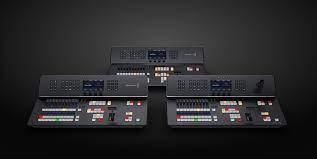
The Blackmagic Design Spares - ATEM 2 M/E Panel - PCB LCD is the dedicated controller board responsible for driving the high-resolution menu screens on the 2 M/E Advanced or Broadcast Panels.
In a 2 M/E panel, the LCDs are not just "monitors"—they are interactive hubs that provide feedback for the "Soft Knobs," showing parameters for chroma keying, DVE positioning, and system configuration. If this board fails, you lose the ability to navigate the hardware menus, effectively "blinding" the operator for deep configuration tasks.
Video Driver Logic: Converts the data from the panel’s master processor into the graphical user interface (GUI) seen on the screen.
Backlight Regulation: Manages the brightness and power delivery to the LCD's LED backlighting.
Soft Knob Integration: Acts as the interface between the rotary encoders (the knobs directly below the screen) and the visual feedback on the display.
Menu Navigation Logic: Processes the "Page Up/Down" and "Home" button commands to cycle through various setting menus.
"White Screen of Death": The screen powers on and the backlight is visible, but no text or graphics appear.
Dead Lines/Artifacts: Persistent vertical or horizontal lines appear across the display, or the screen "flickers" with digital noise.
Black Screen (No Backlight): The panel is functional (buttons light up), but the screen remains completely dark.
Burn-in or Fading: Over years of 24/7 operation, the LCD can lose contrast or suffer from "ghosting" where old menu items remain visible on the screen.
Corrupted UI: The text on the screen appears as "gibberish" or random characters, indicating a failure in the character generator or the VRAM on the LCD PCB.
Repair Level: 3 (Moderate). 1. Delicate Ribbon Cables: The LCD is connected via a very thin, wide Flexible Flat Cable (FFC). These are extremely easy to tear. Ensure the locking tab on the connector is flipped up before attempting to remove the cable.
Front Panel Access: On many 2 M/E models, you must remove the screws from the underside of the panel to drop the internal tray, but the LCD itself is often mounted to the top faceplate.
Static Sensitivity: The driver chips on the LCD PCB are highly susceptible to ESD. Use a wrist strap.
Alignment: When installing the new board, ensure the LCD is perfectly centered in the bezel. If it sits slightly crooked, the "Soft Knobs" may rub against the faceplate or the screen may be partially obscured.
Sometimes the "LCD PCB" is sold as a standalone controller, and sometimes it is integrated with the screen itself.
If the screen is physically cracked: You need the LCD Panel + PCB assembly.
If the screen is physically perfect but shows no data: The LCD PCB (controller) is the likely culprit.
If only the knobs under the screen don't work: The problem is likely the Encoder PCB, not the LCD board.
Before ordering a spare, perform a "Hard Reset" of the panel:
Hold down the Top Left Button in the menu section while powering on.
Check the ATEM Setup Utility on your computer. If the software says "Panel Not Found," the communication logic on the PCB is dead. If it says "Update Required," a firmware refresh might bring the screen back to life without a hardware swap.
Are you seeing a completely blank screen, or is the image garbled/distorted?

The Blackmagic Design Spares - ATEM 2 M/E Panel - PCB LCD is the dedicated controller board responsible for driving the high-resolution menu screens on the 2 M/E Advanced or Broadcast Panels.
In a 2 M/E panel, the LCDs are not just "monitors"—they are interactive hubs that provide feedback for the "Soft Knobs," showing parameters for chroma keying, DVE positioning, and system configuration. If this board fails, you lose the ability to navigate the hardware menus, effectively "blinding" the operator for deep configuration tasks.
Video Driver Logic: Converts the data from the panel’s master processor into the graphical user interface (GUI) seen on the screen.
Backlight Regulation: Manages the brightness and power delivery to the LCD's LED backlighting.
Soft Knob Integration: Acts as the interface between the rotary encoders (the knobs directly below the screen) and the visual feedback on the display.
Menu Navigation Logic: Processes the "Page Up/Down" and "Home" button commands to cycle through various setting menus.
"White Screen of Death": The screen powers on and the backlight is visible, but no text or graphics appear.
Dead Lines/Artifacts: Persistent vertical or horizontal lines appear across the display, or the screen "flickers" with digital noise.
Black Screen (No Backlight): The panel is functional (buttons light up), but the screen remains completely dark.
Burn-in or Fading: Over years of 24/7 operation, the LCD can lose contrast or suffer from "ghosting" where old menu items remain visible on the screen.
Corrupted UI: The text on the screen appears as "gibberish" or random characters, indicating a failure in the character generator or the VRAM on the LCD PCB.
Repair Level: 3 (Moderate). 1. Delicate Ribbon Cables: The LCD is connected via a very thin, wide Flexible Flat Cable (FFC). These are extremely easy to tear. Ensure the locking tab on the connector is flipped up before attempting to remove the cable.
Front Panel Access: On many 2 M/E models, you must remove the screws from the underside of the panel to drop the internal tray, but the LCD itself is often mounted to the top faceplate.
Static Sensitivity: The driver chips on the LCD PCB are highly susceptible to ESD. Use a wrist strap.
Alignment: When installing the new board, ensure the LCD is perfectly centered in the bezel. If it sits slightly crooked, the "Soft Knobs" may rub against the faceplate or the screen may be partially obscured.
Sometimes the "LCD PCB" is sold as a standalone controller, and sometimes it is integrated with the screen itself.
If the screen is physically cracked: You need the LCD Panel + PCB assembly.
If the screen is physically perfect but shows no data: The LCD PCB (controller) is the likely culprit.
If only the knobs under the screen don't work: The problem is likely the Encoder PCB, not the LCD board.
Before ordering a spare, perform a "Hard Reset" of the panel:
Hold down the Top Left Button in the menu section while powering on.
Check the ATEM Setup Utility on your computer. If the software says "Panel Not Found," the communication logic on the PCB is dead. If it says "Update Required," a firmware refresh might bring the screen back to life without a hardware swap.
Are you seeing a completely blank screen, or is the image garbled/distorted?