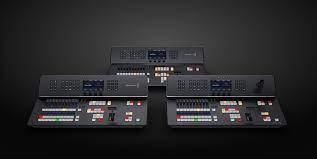
The Blackmagic Design Spares - ATEM 1 M/E Panel - PCB Control (often called the System Control PCB) is the dedicated circuit board that lives directly behind the LCD and the rotary "soft knobs" on the ATEM 1 M/E Broadcast or Advanced Panel.
While the Main PCB handles the networking and "brain" functions, the Control PCB is the specialized interface that handles the high-resolution menu system and the precision data from the encoders.
Core Responsibilities
-
Menu Logic Engine: Interprets the "Page Up/Down" and "Home" button commands to cycle through the switcher's internal settings.
-
Encoder Processing: Manages the data from the rotary knobs. It converts the mechanical "clicks" of the knobs into digital values for parameters like Chroma Key Gain, DVE X/Y coordinates, or Audio levels.
-
LCD Driver Hub: Acts as the bridge between the Main PCB data and the physical LCD screen. It houses the video driver and the backlight power regulation for the display.
-
Secondary Input Handling: Typically processes the buttons located in the immediate vicinity of the screen (the numeric keypad and the menu navigation keys).
When to Replace the Control PCB
-
"Frozen" Menus: The panel connects to the switcher, and the buttons in the M/E row work, but the menu screen is stuck and the navigation buttons do nothing.
-
Erratic Knob Behavior: If all the rotary encoders start "skipping" or jumping values at the same time, it is usually a failure of the processing logic on the Control PCB rather than the physical knobs themselves.
-
LCD Signal Corruption: The screen shows "static," "snow," or garbled text, but the screen itself is not physically cracked.
-
Numeric Keypad Failure: If you can no longer type in IP addresses or transition durations using the 10-key pad on the right, the controller on this board has likely failed.
Technical Installation Note
Repair Level: 3 (Moderate). 1. D-Shaft Alignment: You must pull the plastic caps off the rotary knobs on the front of the panel before the PCB can be dropped out of the internal chassis.
2. High-Density Interconnects: This board is usually connected to the Main PCB via a high-density ribbon cable. Ensure the cable is seated perfectly flat; even a slight tilt in the connector can cause "ghost" data to appear on the screen.
3. FFC Connector Caution: The thin ribbon cable going to the LCD screen is extremely fragile. Use a plastic spudger to release the Zero Insertion Force (ZIF) latch. Do not pull the cable until the latch is flipped open.
4. Static Management: This board contains the graphics and logic controllers for the UI, which are highly sensitive to ESD. Always use a grounding strap.
Diagnostic: Control PCB vs. Main PCB
-
It is the Control PCB if: The switcher is working fine via the computer software, and the M/E row (inputs) on the panel works, but the menu section is dead or glitchy.
-
It is the Main PCB if: The entire panel is "hunting" for a connection, won't show up on the network, or if the screen is stuck on a "Blackmagic Design" splash screen.
Expert Advice: If you are replacing this board because of "jumpy" knobs, try a deep cleaning of the encoders with DeoxIT F5 first. However, if the LCD screen is blank and the buttons around it are unresponsive, the Control PCB has likely suffered a power rail failure and needs a full swap.
Is your menu screen completely blank, or is it showing garbled information when you try to navigate settings?