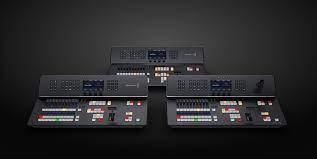
The Blackmagic Design Spares - ATEM 1 M/E Production Studio 4K - Mezzanine PCB (often called the I/O Board) is the secondary circuit board that sits directly above the Main PCB in the 1RU chassis.
While the 2 M/E and 4 M/E models are larger, this 1 M/E "4K" variant is incredibly dense. The Mezzanine board is responsible for the physical interface of the 10x 6G-SDI inputs, the 1x HDMI input, and the various SDI Program and Aux outputs.
Core Responsibilities
-
High-Speed I/O: Manages the physical 6G-SDI connectors. It handles the signal equalization needed to maintain a clean 4K image over long cable runs.
-
HDMI Interface: Houses the HDMI input circuitry, including the HDCP handshake logic and EDID management.
-
Reference & Sync: Processes the "Ref In" (Genlock) signal, ensuring the switcher is frame-synchronized with your cameras.
-
Data Bridge: Down-converts or prepares the incoming high-bandwidth video data to be sent through high-density connectors to the Main PCB for processing (Keys, DVE, and transitions).
When to Replace the Mezzanine PCB
-
SDI "Blackout" Bank: All inputs (1–10) are dead or showing "No Signal," but the ATEM Software Control shows the unit is connected and healthy.
-
HDMI Port Failure: The HDMI input is physically loose or fails to recognize any signal, while the SDI ports work fine.
-
Physical BNC Damage: If a BNC connector has been sheared off or the internal center pin is broken, the entire Mezzanine board is typically replaced to maintain broadcast reliability.
-
6G-SDI Jitter: The unit works perfectly in 1080p, but the image "tears" or loses sync as soon as you switch to a 4K Ultra HD video standard.
Technical Installation Note
Repair Level: 4 (Advanced).
-
The Nut Removal: You must remove the silver hex nuts and washers from all 15+ BNC connectors on the rear. A $14\text{mm}$ deep-well socket is the best tool for this.
-
Board-to-Board Connectors: The Mezzanine board is joined to the Main PCB via several multi-pin headers. Warning: You must lift the board perfectly vertically. Tilting it during removal can bend the pins on the Main PCB underneath, which is a catastrophic failure.
-
Thermal Pads: High-bandwidth 6G-SDI chips generate significant heat. You must ensure the thermal pads on the underside of the Mezzanine board are present and making contact with the internal heatsinks/chassis.
-
Chassis Flex: Because the BNC ports are soldered to the board but poked through the chassis, ensure you don't over-tighten the BNC nuts, which can put "bowing" stress on the PCB.
Diagnostic: Mezzanine vs. Main PCB
-
It's the Mezzanine Board if: You have a Multiview output and the software connects, but your inputs are missing.
-
It's the Main PCB if: The unit won't boot, won't connect to Ethernet, or if the Multiview itself is black or garbled.
Expert Advice: If you are losing signal on just one or two ports, check for "cold solder joints" on the BNC legs where they meet the PCB. Sometimes a simple reflow with a soldering iron can save you the cost of a full replacement Mezzanine board.
Are you seeing a failure on the HDMI input specifically, or are the SDI banks failing to register your cameras?