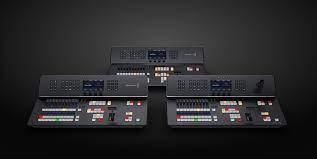
Blackmagic Design Spares - ATEM 2M/E Prod Studio 4K - PCB SDI
Blackmagic Design Spares - ATEM 2M/E Prod Studio 4K - PCB SDI is backordered and will ship as soon as it is back in stock.
Couldn't load pickup availability
Welcome to our store Learn more
Up to 50% off on certain Certified Pre-Owned Broadcast Equipment
New collections added! Learn more
Blackmagic Design Spares - ATEM 2M/E Prod Studio 4K - PCB SDI is backordered and will ship as soon as it is back in stock.
Couldn't load pickup availability
The Blackmagic Design Spares - ATEM 2 M/E Production Studio 4K - PCB SDI is the specific I/O interface board (often referred to as the "SDI Board" or "Connector PCB") that populates the rear of the unit. In the ATEM 2 M/E 4K architecture, this board is distinct from the Main processing logic, focusing entirely on high-frequency signal distribution for the 20 SDI inputs and various SDI outputs.
Because this board handles 6G-SDI or 12G-SDI signals (depending on the specific hardware revision), it is a high-precision component where the physical layout of the traces is critical to preventing signal "jitter" or data loss.
SDI Input Bank: Manages the 20 physical BNC inputs. It handles the signal equalization required to "clean up" incoming video that has traveled over long cable runs.
Return/Aux Outputs: Houses the BNC connectors for the 6 Aux outputs, Program out, and Preview out.
Signal Re-clocking: Every port on this board has a dedicated "Re-clocker" chip. This ensures that the output signal leaving the switcher is as strong and stable as the original source.
6G/12G-SDI Support: Manages the massive bandwidth required for Ultra HD 4K video. If this board fails, you may see signals working in 1080p but failing immediately when the switcher is set to a 4K resolution.
"Dead" Port Rows: If a horizontal row of BNC ports (e.g., all the even-numbered inputs) stops working, the power rail or controller chip on the SDI board has likely failed.
Physical BNC Fatigue: The SDI PCB is the most common part to break due to mechanical stress. If a BNC connector is "spinning" or has been pushed into the chassis, the solder pads on the PCB are likely torn.
Sparking/Static Damage: SDI ports are "hot-pluggable," but a significant voltage difference between a camera and the switcher can fry the input protection diodes on this specific board.
BNC Center-Pin Damage: If a user accidentally inserts a damaged SDI cable and snaps the "female" center pin of the BNC port, the entire SDI board is usually replaced to ensure broadcast reliability.
Repair Level: 4 (Advanced). 1. The Nut Marathon: You must remove the silver hex nuts and washers from all 20+ SDI connectors on the rear. Use a proper $14\text{mm}$ socket. Pro-Tip: Do not use pliers, as you will scratch the black paint of the chassis, which can devalue the unit for resale.
2. Ribbon Cable Interconnects: The SDI PCB connects to the Main PCB via several high-density ribbon cables or "flex-circuits." These are extremely fragile. Ensure you unlatch the "ZIF" (Zero Insertion Force) connectors before pulling the cables.
3. BNC Alignment: When sliding the new board in, all 20+ BNC ports must line up with the back panel holes simultaneously. It is a tight fit. If it doesn't slide in easily, check that a ribbon cable isn't pinched between the board and the chassis.
4. Static Control: This board is covered in sensitive CMOS chips. Wear an ESD wrist strap; one static pop can kill an input before you even finish the repair.
It's the SDI Board if: The ATEM Software Control shows that the switcher is alive, the Multiview UI is visible, and the internal Media Pool graphics can be keyed over "Black," but your external SDI cameras show no signal.
It's the Main PCB if: The software won't connect, or the entire Multiview output is missing/garbled.
Expert Advice: If you are replacing this board due to physical damage, consider installing a 1RU or 2RU BNC Patch Panel in your rack. By plugging your cameras into a patch panel instead of directly into the SDI PCB, you transfer the "wear and tear" to an inexpensive patch cable rather than the expensive internal SDI board.
Are you experiencing a loss of signal across all ports, or is one specific BNC connector physically damaged?

The Blackmagic Design Spares - ATEM 2 M/E Production Studio 4K - PCB SDI is the specific I/O interface board (often referred to as the "SDI Board" or "Connector PCB") that populates the rear of the unit. In the ATEM 2 M/E 4K architecture, this board is distinct from the Main processing logic, focusing entirely on high-frequency signal distribution for the 20 SDI inputs and various SDI outputs.
Because this board handles 6G-SDI or 12G-SDI signals (depending on the specific hardware revision), it is a high-precision component where the physical layout of the traces is critical to preventing signal "jitter" or data loss.
SDI Input Bank: Manages the 20 physical BNC inputs. It handles the signal equalization required to "clean up" incoming video that has traveled over long cable runs.
Return/Aux Outputs: Houses the BNC connectors for the 6 Aux outputs, Program out, and Preview out.
Signal Re-clocking: Every port on this board has a dedicated "Re-clocker" chip. This ensures that the output signal leaving the switcher is as strong and stable as the original source.
6G/12G-SDI Support: Manages the massive bandwidth required for Ultra HD 4K video. If this board fails, you may see signals working in 1080p but failing immediately when the switcher is set to a 4K resolution.
"Dead" Port Rows: If a horizontal row of BNC ports (e.g., all the even-numbered inputs) stops working, the power rail or controller chip on the SDI board has likely failed.
Physical BNC Fatigue: The SDI PCB is the most common part to break due to mechanical stress. If a BNC connector is "spinning" or has been pushed into the chassis, the solder pads on the PCB are likely torn.
Sparking/Static Damage: SDI ports are "hot-pluggable," but a significant voltage difference between a camera and the switcher can fry the input protection diodes on this specific board.
BNC Center-Pin Damage: If a user accidentally inserts a damaged SDI cable and snaps the "female" center pin of the BNC port, the entire SDI board is usually replaced to ensure broadcast reliability.
Repair Level: 4 (Advanced). 1. The Nut Marathon: You must remove the silver hex nuts and washers from all 20+ SDI connectors on the rear. Use a proper $14\text{mm}$ socket. Pro-Tip: Do not use pliers, as you will scratch the black paint of the chassis, which can devalue the unit for resale.
2. Ribbon Cable Interconnects: The SDI PCB connects to the Main PCB via several high-density ribbon cables or "flex-circuits." These are extremely fragile. Ensure you unlatch the "ZIF" (Zero Insertion Force) connectors before pulling the cables.
3. BNC Alignment: When sliding the new board in, all 20+ BNC ports must line up with the back panel holes simultaneously. It is a tight fit. If it doesn't slide in easily, check that a ribbon cable isn't pinched between the board and the chassis.
4. Static Control: This board is covered in sensitive CMOS chips. Wear an ESD wrist strap; one static pop can kill an input before you even finish the repair.
It's the SDI Board if: The ATEM Software Control shows that the switcher is alive, the Multiview UI is visible, and the internal Media Pool graphics can be keyed over "Black," but your external SDI cameras show no signal.
It's the Main PCB if: The software won't connect, or the entire Multiview output is missing/garbled.
Expert Advice: If you are replacing this board due to physical damage, consider installing a 1RU or 2RU BNC Patch Panel in your rack. By plugging your cameras into a patch panel instead of directly into the SDI PCB, you transfer the "wear and tear" to an inexpensive patch cable rather than the expensive internal SDI board.
Are you experiencing a loss of signal across all ports, or is one specific BNC connector physically damaged?