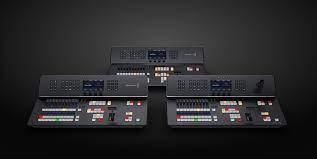
Blackmagic Design Spares - ATEM 4M/E BCast Studio 4K - PCB Mezz
Blackmagic Design Spares - ATEM 4M/E BCast Studio 4K - PCB Mezz is backordered and will ship as soon as it is back in stock.
Couldn't load pickup availability
Welcome to our store Learn more
Up to 50% off on certain Certified Pre-Owned Broadcast Equipment
New collections added! Learn more
Blackmagic Design Spares - ATEM 4M/E BCast Studio 4K - PCB Mezz is backordered and will ship as soon as it is back in stock.
Couldn't load pickup availability
The Blackmagic Design Spares - ATEM 4 M/E Broadcast Studio 4K - Mezzanine PCB is a specialized high-density interface board for the "top-of-the-line" 2RU rack-mount switcher.
Because this switcher handles 20 inputs of 12G-SDI and supports frame rates up to 2160p60, the data throughput is too massive for a single circuit board. The Mezzanine board acts as the "Input/Output Engine," sitting directly atop the Main PCB to handle the physical physical signal conditioning for the massive array of BNC ports.
12G-SDI Bank Management: Specifically handles the 20 inputs and the multiple Program/Aux outputs. Each port has dedicated 12G-SDI re-clocking to ensure signal integrity over long cable runs.
Standards Conversion: In the Broadcast Studio 4K model, the Mezzanine board contains the hardware that allows every single input to have its own standards converter. This allows you to plug in a mix of HD, Ultra HD, and different frame rates simultaneously.
Signal "Sandwich" Interconnect: It passes processed video data down to the Main PCB (where the 4 M/E rows and 16 Keyers are calculated) via high-speed, multi-pin board-to-board connectors.
On this professional-grade unit, the Mezzanine board is often the part that "takes the bullet" for the rest of the system during electrical mishaps.
Bank Failure: If a group of inputs (e.g., Inputs 1–10) suddenly goes black while the rest of the switcher functions, a localized power regulator or controller chip on the Mezzanine board has likely failed.
Sync/Conversion Errors: The switcher connects to the computer and shows the Multiview, but the inputs show "Unsupported Format" or glitchy video despite the "Standards Conversion" being turned on.
BNC Physical Damage: With 20 inputs and over 10 outputs, the BNC connectors are under immense stress in mobile fly-packs. If a connector is sheared off or the internal pin is pushed in, the Mezzanine board is the part that must be replaced.
Heat-Related Artifacts: If the video shows "sparkles" or digital noise that only appears after the unit has been on for 30 minutes, the 12G-SDI processing chips on this board are likely overheating or failing.
Repair Level: 5 (Expert). This is a high-risk repair due to the density of the components.
Massive Port Disassembly: You must remove the hex nuts and washers from all 30+ BNC connectors on the rear of the unit. Using a power driver is discouraged as it is very easy to strip the threads or slip and gouge the PCB.
The "Lifting" Danger: The board is connected to the Main PCB by several high-density "mating" connectors. You must lift the board perfectly level. If you tilt the board while lifting, you will bend the pins on the Main PCB, which usually results in needing to replace both boards.
Thermal Pad Criticality: This board generates an immense amount of heat. You must replace all thermal pads (often 10 or more) that sit between the Mezzanine chips and the internal heatsinks. Reusing old, compressed pads will lead to a "thermal runaway" failure of the new board.
Weight & Alignment: The board is heavy and large. When reinstalling, ensure all 30+ BNC ports align with the chassis holes before pressing down on the interconnect pins.
It is the Mezzanine Board if: The ATEM Software Control works, the Multiview UI is visible, but all or most of the SDI Inputs are dead.
It is the Main Board if: The unit won't boot, won't connect via Ethernet, or the 4 M/E effects (like the DVEs) are crashing the system.
Expert Advice: Because the ATEM 4 M/E Broadcast Studio 4K is a flagship unit, it is highly sensitive to static. If you are replacing the Mezzanine board, ensure you are working in a climate-controlled, ESD-safe environment. A single static pop to one of the 12G-SDI pins during installation can permanently damage the new board.
Are you losing a specific group of inputs, or is the entire SDI I/O bank unresponsive?

The Blackmagic Design Spares - ATEM 4 M/E Broadcast Studio 4K - Mezzanine PCB is a specialized high-density interface board for the "top-of-the-line" 2RU rack-mount switcher.
Because this switcher handles 20 inputs of 12G-SDI and supports frame rates up to 2160p60, the data throughput is too massive for a single circuit board. The Mezzanine board acts as the "Input/Output Engine," sitting directly atop the Main PCB to handle the physical physical signal conditioning for the massive array of BNC ports.
12G-SDI Bank Management: Specifically handles the 20 inputs and the multiple Program/Aux outputs. Each port has dedicated 12G-SDI re-clocking to ensure signal integrity over long cable runs.
Standards Conversion: In the Broadcast Studio 4K model, the Mezzanine board contains the hardware that allows every single input to have its own standards converter. This allows you to plug in a mix of HD, Ultra HD, and different frame rates simultaneously.
Signal "Sandwich" Interconnect: It passes processed video data down to the Main PCB (where the 4 M/E rows and 16 Keyers are calculated) via high-speed, multi-pin board-to-board connectors.
On this professional-grade unit, the Mezzanine board is often the part that "takes the bullet" for the rest of the system during electrical mishaps.
Bank Failure: If a group of inputs (e.g., Inputs 1–10) suddenly goes black while the rest of the switcher functions, a localized power regulator or controller chip on the Mezzanine board has likely failed.
Sync/Conversion Errors: The switcher connects to the computer and shows the Multiview, but the inputs show "Unsupported Format" or glitchy video despite the "Standards Conversion" being turned on.
BNC Physical Damage: With 20 inputs and over 10 outputs, the BNC connectors are under immense stress in mobile fly-packs. If a connector is sheared off or the internal pin is pushed in, the Mezzanine board is the part that must be replaced.
Heat-Related Artifacts: If the video shows "sparkles" or digital noise that only appears after the unit has been on for 30 minutes, the 12G-SDI processing chips on this board are likely overheating or failing.
Repair Level: 5 (Expert). This is a high-risk repair due to the density of the components.
Massive Port Disassembly: You must remove the hex nuts and washers from all 30+ BNC connectors on the rear of the unit. Using a power driver is discouraged as it is very easy to strip the threads or slip and gouge the PCB.
The "Lifting" Danger: The board is connected to the Main PCB by several high-density "mating" connectors. You must lift the board perfectly level. If you tilt the board while lifting, you will bend the pins on the Main PCB, which usually results in needing to replace both boards.
Thermal Pad Criticality: This board generates an immense amount of heat. You must replace all thermal pads (often 10 or more) that sit between the Mezzanine chips and the internal heatsinks. Reusing old, compressed pads will lead to a "thermal runaway" failure of the new board.
Weight & Alignment: The board is heavy and large. When reinstalling, ensure all 30+ BNC ports align with the chassis holes before pressing down on the interconnect pins.
It is the Mezzanine Board if: The ATEM Software Control works, the Multiview UI is visible, but all or most of the SDI Inputs are dead.
It is the Main Board if: The unit won't boot, won't connect via Ethernet, or the 4 M/E effects (like the DVEs) are crashing the system.
Expert Advice: Because the ATEM 4 M/E Broadcast Studio 4K is a flagship unit, it is highly sensitive to static. If you are replacing the Mezzanine board, ensure you are working in a climate-controlled, ESD-safe environment. A single static pop to one of the 12G-SDI pins during installation can permanently damage the new board.
Are you losing a specific group of inputs, or is the entire SDI I/O bank unresponsive?