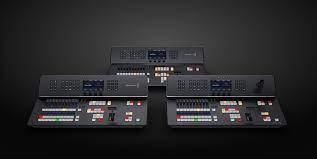
The Blackmagic Design Spares – ATEM Panel – System Control LCD is the specific liquid crystal display component found in the "System Control" section of the ATEM Advanced Panels (1 M/E, 2 M/E, and 4 M/E).
While the System Control Module includes the buttons and knobs, the LCD spare is the raw display panel itself. This is the high-resolution, full-color screen that provides the visual feedback for every menu setting, from chroma keying and DVE coordinates to network configuration and Fairlight audio metering.
Core Responsibilities
-
Menu Rendering: Displays the hierarchical software interface of the ATEM system.
-
Parameter Feedback: Shows real-time numerical values as you turn the rotary encoders.
-
System Diagnostics: Displays health alerts, IP addresses, and firmware versioning.
-
Visual Previews: In some modes, it can display small icons or thumbnails for macros and media pool stills.
When to Replace the LCD (vs. the whole Module)
-
Dead Pixels: Small black or colored dots that stay on the screen regardless of what is being displayed.
-
Backlight Failure: The panel is receiving data (you might see buttons reacting to menus), but the screen is too dark to read without a flashlight.
-
Screen Bleeding: A "bruise-like" purple or black spot on the screen, usually caused by physical pressure or a localized impact.
-
Vertical/Horizontal Lines: Sharp lines running across the screen, indicating a failure of the TAB (Tape Automated Bonding) interface between the glass and the ribbon cable.
-
Severe Burn-in: Ghosted images of old menus that remain visible even when the screen content changes.
Technical Installation Note
Repair Level: 5 (Expert).
-
De-framing the Module: You must first remove the System Control Module from the panel, then carefully disassemble the module's housing to reach the LCD "sandwich."
-
The Fragile FFC: The LCD connects via a very thin Flexible Flat Cable (FFC). This cable is often secured with a "flip-lock" or "slider" ZIF connector.
-
Static Shielding: The LCD has a silver-colored metallic backing that acts as an EMI shield. Ensure this makes proper contact with the grounding points to prevent "static snow" on the display.
-
Dust-Free Environment: Once you remove the protective faceplate, the LCD is exposed. Any speck of dust trapped between the LCD and the front glass will be permanently visible and illuminated by the backlight once reassembled.
Diagnostic: LCD vs. Video Driver
-
It is the LCD if: The screen has physical cracks, lines, or "ink" leaks, but the menu buttons and knobs around it still work to change switcher settings (verified via the ATEM Software Control on a PC).
-
It is the Driver/Main PCB if: The screen shows "garbage" data, white-outs, or flickers rhythmically, which often points to a failure in the power delivery or the graphics processor rather than the glass itself.
Pro-Tip: Brightness Management
If your new LCD seems "too blue" or "too bright" compared to your old one, navigate to the Panel Settings menu. Blackmagic allows you to calibrate the brightness of the LCD. Setting it to 70-80% not only makes it more comfortable for long shifts in dark control rooms but also significantly extends the life of the backlight LEDs.
Are you seeing physical damage to the screen glass, or has the display simply gone black while the buttons are still lit?