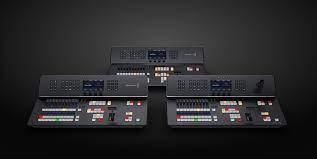
the Blackmagic Design Spares - ATEM Panel - Transition ME2+ Module is a modular hardware component found in larger ATEM control surfaces (such as the 2 M/E and 4 M/E Advanced Panels).
While the "Standard" 1 M/E transition block handles basic cuts and autos, the ME2+ Module is a self-contained PCB and tactile assembly designed to manage the expanded transition capabilities of a second (or higher) M/E row. This module includes the transition rate display, the dedicated selection buttons (BKGD, Key 1–4), and the logic interface for the T-Bar fader.
Core Responsibilities
-
Transition Delegation: Controls which layers (Background or Upstream Keyers) are included in the next transition.
-
Rate Feedback: Houses the small LED or OLED display that shows the transition duration in frames.
-
Selection Logic: Manages the tactile "Auto," "Cut," and "Tie" buttons for the specific M/E row it is assigned to.
-
T-Bar Interface: Interprets the optical or mechanical position of the Fader Handle and communicates that data to the panel’s Main PCB.
When to Replace the ME2+ Module
-
"Sticky" or Unresponsive Buttons: The AUTO or CUT buttons on the second M/E row require multiple presses to register, or they have physically collapsed.
-
Display Corruption: The frame-rate display is garbled, dim, or missing segments.
-
Redundancy Failure: You can perform transitions via the ATEM Software Control, but the physical buttons on the ME2 row are dead or intermittently "flicker" on and off.
-
T-Bar "Jumping": The transition "stutters" halfway through a move. While the handle itself is mechanical, the processing of that movement happens on this module's logic board.
Technical Installation Note
Repair Level: 3 (Moderate).
-
Modular Swap: Modern Blackmagic Advanced Panels are built with "Drop-in" modules. You typically access the screws from the underside of the panel chassis.
-
Ribbon Cable Care: The ME2+ module connects to the panel's internal distribution bus via a medium-density ribbon cable. Ensure the panel is powered off before disconnecting; hot-swapping these modules can blow a surface-mount fuse on the motherboard.
-
Fader Calibration: After replacing this module, you may need to recalibrate the T-Bar. This is usually done via the panel's internal "Maintenance" menu (accessed by holding specific buttons during boot-up).
-
Button Cap Transfer: Note that replacement modules sometimes ship without the clear plastic button caps. You may need to migrate your existing caps/labels to the new module.
Diagnostic: Module vs. Main PCB
-
It is the ME2+ Module if: The 1 M/E row and the System Control (LCD) are working perfectly, and the failure is isolated to the transition block of the second M/E.
-
It is the Main PCB if: Multiple modules across the panel are behaving erratically or if the panel is failing to maintain a network connection with the switcher.
Pro-Tip: The "Dust" Culprit
Before replacing the module for a "failed" button, check if the issue is just dust under the NKK-style cap. Because the fader slot is an open vertical gap, dust and hair often fall into the chassis and migrate into the button housings. A blast of compressed air around the base of the AUTO button can often restore functionality without a full board swap.
Are you experiencing a total failure of the transition buttons on your second M/E row, or is the frame-rate display simply not lighting up?