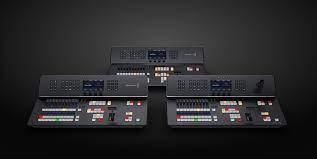
The Blackmagic Design Spares - ATEM Television Studio Connector PCB - Audio is the dedicated interface board responsible for the analog audio inputs and outputs. On the ATEM Television Studio HD/Pro models, this is a separate vertical or secondary board that houses the XLR and RCA connectors.
In professional switching, this board acts as the "Analog Front End," converting physical sound waves into digital data that the Main PCB can then embed into the SDI/HDMI video streams.
Core Responsibilities
-
Mic/Line Preamps: Contains the circuitry that handles gain for the balanced XLR inputs.
-
A/D Conversion: Converts incoming analog audio from the XLR and RCA (Hi-Fi) ports into a digital signal for the switcher’s internal Fairlight audio mixer.
-
Talkback & Program Return: Manages the routing for the operator’s headset and the talkback communication sent to cameras via the SDI return feeds.
-
ESD Protection: Protects the rest of the switcher from static shocks or phantom power "spikes" that can occur when plugging in active audio gear.
When to Replace the Audio Connector PCB
-
"Dead" XLR Ports: If you plug in a known-good microphone or mixer feed and receive no signal or levels on the Multiview meters, but the video inputs are working fine.
-
Constant Hum or Buzz: If a specific input develops a permanent "ground hum" or "static" that persists even when no cables are connected (indicating a blown capacitor or op-amp on the PCB).
-
Physical Connector Damage: The locking tabs on the XLR ports have snapped, or the RCA jacks have become "pitted" or loose, leading to intermittent signal loss.
-
Talkback Failure: If you can hear the cameras, but the cameras can't hear you (or vice-versa), the specialized talkback codec on this board may have failed.
Technical Installation Note
Repair Level: 3 (Moderate). 1. Multiple Board Interconnects: This board is often connected to the Main PCB via a high-density ribbon cable. Caution: On many ATEM models, the Audio PCB is mounted at a $90^\circ$ angle to the Main PCB. You must be extremely careful not to put "leverage" on the connector when sliding the board out.
2. Rear Panel Nuts: You must remove the specialized silver hex nuts from the outside of the XLR ports. You will likely need a thin-walled $14\text{mm}$ or $16\text{mm}$ socket or specialized pliers to avoid scratching the paint.
3. The "Grounding" Strap: This board often has a dedicated ground wire or foil shield that contacts the chassis to prevent interference. Ensure this is reattached exactly as found, or you will introduce a "60Hz hum" into your final broadcast.
4. Static Control: Audio chips (especially the A/D converters) are highly sensitive to ESD. Work on an anti-static mat.
Diagnostic: Audio PCB vs. Main PCB
-
It’s the Audio PCB if: You can see the audio levels moving when you feed audio via SDI or HDMI, but the XLR and RCA inputs show nothing.
-
It’s the Main PCB if: All audio (including embedded SDI audio) is missing, or if the "Fairlight" tab in the ATEM Software Control is grayed out or unresponsive.
Expert Advice: Before ordering this spare, check your Input Settings in the ATEM Software Control. Many users believe the board is dead when the input is simply set to "Line" level instead of "Mic" level, or when the "AFV" (Audio Follow Video) logic is muting the input.
Are you experiencing a total loss of audio across both XLR ports, or is one specific jack physically damaged?