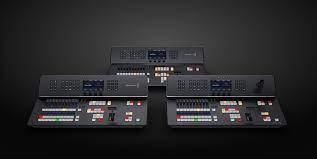
The Blackmagic Design Spares - ATEM Television Studio Connector PCB (Lower) is the interface board responsible for the bottom tier of physical connections on the rear of the unit. In the "stacked" architecture of the ATEM Television Studio HD, HD8, and similar rack-mount models, this board typically houses the Primary Outputs (Program, Multiview, Aux) and the Power Input interface.
While the Upper PCB often handles inputs, the Lower PCB is the "Output Hub," making it critical for getting your signal out to recorders, monitors, and streamers.
Core Responsibilities
-
Output Routing: Houses the 12G/3G-SDI BNC connectors for Program Out, Preview Out, and the Multiview.
-
Reference & Control: Often contains the Genlock/Reference input and the RS-422 or Ethernet control ports, depending on the specific model layout.
-
Power Bridge: In many designs, the DC power from the internal power supply module connects to this board first before being distributed to the rest of the system.
-
Signal Shielding: Provides the ground plane for the most critical signals leaving the switcher to prevent electromagnetic interference (EMI).
When to Replace the Lower Connector PCB
-
Total Output Failure: You can see the buttons switching and the software is connected, but none of the physical SDI outputs (Program or Multiview) are sending a signal.
-
BNC Mechanical Failure: A BNC connector has become "loose" or has been sheared off due to a heavy cable being tripped over. Because these are high-frequency parts, a loose connector usually causes intermittent signal "flicking."
-
Sync/Genlock Issues: The switcher refuses to lock to an external house clock (Reference In), even with known good cables and signals.
-
Power Connectivity Issues: If the unit intermittently loses power when the IEC cable is moved, the solder joints where the power harness meets the Lower PCB may be fatigued.
Technical Installation Note
Repair Level: 3 (Moderate). 1. Chassis Stripping: Similar to the Upper PCB, you must remove the hex nuts and screws from the back of all connectors on this level.
2. The "Bridge" Connection: The Lower PCB is usually the "base" layer. You often have to remove the Upper PCB and several ribbon cables just to gain access to the Lower board.
3. BNC Nut Tension: When reinstalling, do not over-tighten the BNC nuts with a wrench. Over-tightening can crack the PCB substrate or the trace leading to the center pin. Finger-tight plus a quarter-turn with a tool is generally sufficient.
4. Harness Check: Ensure the high-amperage power harness from the PSU is snapped into the Lower PCB securely. A loose power fit can cause "arcing," which will eventually char the board and cause a fire hazard.
Diagnostic: Lower PCB vs. Main PCB
-
Lower PCB Issue: The Multiview output is dead, but if you connect via USB/Ethernet to your computer, you can still see the audio meters moving and the "Media Pool" graphics in the software. This confirms the "brain" (Main PCB) is alive, but the "gate" (Lower PCB) is closed.
-
Main PCB Issue: Both the physical outputs and the software connection are dead/unresponsive.
Expert Advice: The Lower PCB is prone to "Ground Loop" damage. If you are connecting the switcher to a projector or a different building's power grid via SDI, always use an SDI Galvanic Isolator. This prevents a voltage surge from traveling back up the cable and frying the output drivers on your Lower Connector PCB.
Are you experiencing a loss of signal on all outputs, or is one specific BNC connector physically damaged?