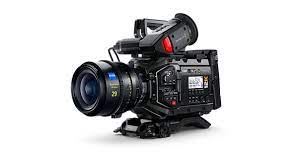
The Blackmagic Design Spares - Pocket Cinema Camera 6K (PCC6K) - Main PCB is the primary motherboard for the original 6K (EF mount) camera. This board is the "brain" of the system, housing the FPGA processing engine that handles the $6144 \times 3456$ Super 35 sensor data and encodes it into Blackmagic RAW or ProRes.
Because the PCC6K is a high-performance cinema tool packed into a compact carbon fiber polycarbonate chassis, the Main PCB is extremely dense and operates under significant thermal stress.
Core Responsibilities
-
Image Processing: Manages the debayering and scaling of the 6K image in real-time.
-
Storage Controller: Controls the high-speed data flow to the internal CFast 2.0 and SD UHS-II slots.
-
Power Management: Regulates the $12\text{V}$–$20\text{V}$ input from the DC port and the $7.4\text{V}$ from the LP-E6 battery.
-
I/O Interface: Operates the full-size HDMI port, Mini XLR audio pre-amps, and the USB-C $3.1$ Gen 1 expansion port.
When to Replace the Main PCB
A Main PCB swap is usually the "final step" in troubleshooting when individual component fixes fail:
-
"Bricked" Status: The camera won't power on at all, despite testing with multiple batteries and DC power.
-
HDMI / USB-C Failure: If the external ports stop functioning and the issue isn't the physical port or cable, the controller chips on the PCB have likely fried.
-
Fan Error / Thermal Shutoff: If the fan circuitry on the board fails, the camera will shut down to protect the sensor even if a new fan is installed.
-
Corrupted Image Data: Permanent "glitching," magenta frames, or vertical lines that appear on both the LCD and recorded footage (indicating a failure in the processing pipeline).
Technical Installation Note
Repair Level: 5 (Advanced/Expert). This is a total teardown of the camera.
-
Ribbon Cable Complexity: There are roughly 10 to 12 delicate ribbon cables (FPC) that connect to this board, including the sensor, LCD, buttons, audio board, and media slots.
-
Sensor Transfer: You must carefully detach the Super 35 sensor assembly from the old board and move it to the new one. This requires an ESD-safe environment; any static discharge to the sensor pins will destroy it.
-
Thermal Paste Application: The main processor on the PCB relies on a large copper heat sink. You must clean off the old thermal material and apply fresh, high-quality thermal paste during the swap.
-
Firmware Sync: After installing a new board, you will likely need to connect it to a computer via USB-C and run the Blackmagic Camera Setup utility to "marry" the board to the camera's internal components and update it to the latest firmware.
Critical Warnings
-
Model Match: Ensure you have the PCB for the original 6K. The 6K Pro and 6K G2 use different Main PCBs due to their tilting screens, ND filter motors (Pro only), and different power requirements.
-
Audio Board Separation: In the PCC6K, the audio inputs (XLR/3.5mm) are often on a separate "daughterboard" connected via ribbon. If your issue is only audio, you may only need that smaller spare part rather than the expensive Main PCB.
Expert Advice: Before buying a new PCB for a "dead" camera, check the Internal Fuse. Blackmagic boards often have surface-mount fuses near the power input. A professional technician can sometimes bridge or replace a fuse for a fraction of the cost of a new motherboard.
Is the camera completely unresponsive, or are you seeing specific error codes on the screen?