Blackmagic Design Spares - Camera - Glass Filter PL
Blackmagic Design Spares - Camera - Glass Filter PL is backordered and will ship as soon as it is back in stock.
Couldn't load pickup availability
Welcome to our store Learn more
Up to 50% off on certain Certified Pre-Owned Broadcast Equipment
New collections added! Learn more
Blackmagic Design Spares - Camera - Glass Filter PL is backordered and will ship as soon as it is back in stock.
Couldn't load pickup availability
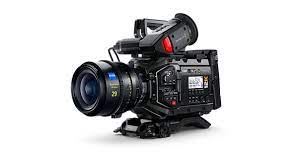
The Blackmagic Design Spares - Camera - Glass Filter PL refers to the specialized optical stack found in the interchangeable lens mount systems of professional Blackmagic cameras. While most consumer cameras have fixed glass, Blackmagic’s PL-mount systems (like those on the URSA Mini Pro series or the Cinema Camera 6K Full Frame) are designed with a modular "turret" or "shuttle" that houses the IR-cut and OLPF (Optical Low Pass Filter) glass.
IR Cutoff: Blocks infrared light that can cause "pollution" (blacks turning reddish/magenta) in high-dynamic-range digital sensors.
OLPF (Optical Low Pass Filter): Specifically designed to reduce Moiré (interference patterns on fabrics or screens) and Aliasing (jagged edges) by slightly blurring the image at a microscopic level before it hits the sensor.
Physical Protection: Acts as a sacrificial layer; it is much safer and cheaper to replace a scratched PL filter glass than the sensor itself.
The term "Glass Filter PL" is most commonly used for the following setups:
These cameras use an interchangeable mount system. The glass filter is housed in the "shuttle" behind the PL mount.
Note: The URSA Mini Pro 12K OLPF model features a specific high-performance filter assembly optimized for virtual production (LED walls) that differs from the standard 12K version.
While this camera is natively L-Mount, Blackmagic offers an official L-Mount to PL Adapter. This adapter works in tandem with the camera's built-in OLPF stack. If you are replacing the internal glass on this model, you are replacing the "Optical Filter Stack" located inside the camera body's turret.
If you have a Pocket 6K that has been modified with a third-party PL mount (like Wooden Camera or Beachtek), your glass filter may be an aftermarket part rather than an official Blackmagic spare.
Oxidation (Clouding): Over several years, the coatings on the filter glass can oxidize, appearing as a "fog" or "cloud" inside the lens mount that cannot be wiped away.
Scratches: Even a microscopic scratch can cause significant flaring or "ghosting" when a bright light source (like the sun or a studio lamp) hits the lens at an angle.
Coating Damage: Improper cleaning with harsh chemicals can strip the anti-reflective or IR-cut coatings, leading to inconsistent color reproduction across the frame.
Repair Level: 2 (Moderate).
Environment: You must perform this in a clean, dust-free environment. Use an air-purifier or a "clean box" if possible.
Mount Removal: For the URSA series, you remove the four large screws on the PL mount. The glass filter assembly is typically held in by three smaller screws.
Back Focus (Shimming): CRITICAL. Glass has a refractive index. If you replace the glass filter, the distance the light travels to the sensor changes slightly. You must use the metal shims (included with the mount) to adjust the flange distance.
Test: If your lens can no longer hit "Infinity" focus, you need to remove shims. If your lens "goes past" infinity, you need to add shims.
Handling: Never touch the face of the glass with your fingers. Use vacuum suction tools or plastic tweezers to handle the edges of the filter.
To check if your PL glass filter needs replacing, take a bright LED flashlight and shine it into the mount at a $45^\circ$ angle. This will highlight any "haze," scratches, or dust particles that are invisible under normal room lighting.
Are you looking for the glass for an URSA Mini Pro or for the newer Full Frame Cinema Camera?

The Blackmagic Design Spares - Camera - Glass Filter PL refers to the specialized optical stack found in the interchangeable lens mount systems of professional Blackmagic cameras. While most consumer cameras have fixed glass, Blackmagic’s PL-mount systems (like those on the URSA Mini Pro series or the Cinema Camera 6K Full Frame) are designed with a modular "turret" or "shuttle" that houses the IR-cut and OLPF (Optical Low Pass Filter) glass.
IR Cutoff: Blocks infrared light that can cause "pollution" (blacks turning reddish/magenta) in high-dynamic-range digital sensors.
OLPF (Optical Low Pass Filter): Specifically designed to reduce Moiré (interference patterns on fabrics or screens) and Aliasing (jagged edges) by slightly blurring the image at a microscopic level before it hits the sensor.
Physical Protection: Acts as a sacrificial layer; it is much safer and cheaper to replace a scratched PL filter glass than the sensor itself.
The term "Glass Filter PL" is most commonly used for the following setups:
These cameras use an interchangeable mount system. The glass filter is housed in the "shuttle" behind the PL mount.
Note: The URSA Mini Pro 12K OLPF model features a specific high-performance filter assembly optimized for virtual production (LED walls) that differs from the standard 12K version.
While this camera is natively L-Mount, Blackmagic offers an official L-Mount to PL Adapter. This adapter works in tandem with the camera's built-in OLPF stack. If you are replacing the internal glass on this model, you are replacing the "Optical Filter Stack" located inside the camera body's turret.
If you have a Pocket 6K that has been modified with a third-party PL mount (like Wooden Camera or Beachtek), your glass filter may be an aftermarket part rather than an official Blackmagic spare.
Oxidation (Clouding): Over several years, the coatings on the filter glass can oxidize, appearing as a "fog" or "cloud" inside the lens mount that cannot be wiped away.
Scratches: Even a microscopic scratch can cause significant flaring or "ghosting" when a bright light source (like the sun or a studio lamp) hits the lens at an angle.
Coating Damage: Improper cleaning with harsh chemicals can strip the anti-reflective or IR-cut coatings, leading to inconsistent color reproduction across the frame.
Repair Level: 2 (Moderate).
Environment: You must perform this in a clean, dust-free environment. Use an air-purifier or a "clean box" if possible.
Mount Removal: For the URSA series, you remove the four large screws on the PL mount. The glass filter assembly is typically held in by three smaller screws.
Back Focus (Shimming): CRITICAL. Glass has a refractive index. If you replace the glass filter, the distance the light travels to the sensor changes slightly. You must use the metal shims (included with the mount) to adjust the flange distance.
Test: If your lens can no longer hit "Infinity" focus, you need to remove shims. If your lens "goes past" infinity, you need to add shims.
Handling: Never touch the face of the glass with your fingers. Use vacuum suction tools or plastic tweezers to handle the edges of the filter.
To check if your PL glass filter needs replacing, take a bright LED flashlight and shine it into the mount at a $45^\circ$ angle. This will highlight any "haze," scratches, or dust particles that are invisible under normal room lighting.
Are you looking for the glass for an URSA Mini Pro or for the newer Full Frame Cinema Camera?