

Blackmagic Design ATEM Camera Control Panel
Blackmagic Design ATEM Camera Control Panel is backordered and will ship as soon as it is back in stock.
Couldn't load pickup availability

Blackmagic Design ATEM Camera Control Panel
Blackmagic Design ATEM Camera Control Panel
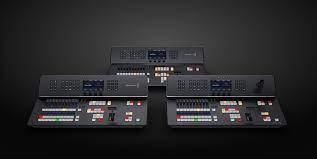
The Blackmagic Design ATEM Camera Control Panel is a professional, four-channel Remote Control Unit (RCU) or Camera Control Unit (CCU) designed for live broadcast. It allows a single vision engineer to balance and match the colors of up to four cameras simultaneously from a central location.
By offloading technical adjustments—like iris, gain, and color balance—to this panel, camera operators are free to focus entirely on framing and composition.
Core Functionality
-
4-in-1 Control: The panel features four identical control strips, each dedicated to one camera. While it controls four cameras at a time, you can quickly reassign any of the strips to a different camera number (e.g., controlling cameras 5–8) via the LCD menu.
-
Professional Joysticks: Each channel has a high-quality, 3-axis joystick.
-
Up/Down: Adjusts the Iris (aperture).
-
Rotation: Adjusts the Master Black (pedestal).
-
Push: Triggers the Preview function, automatically switching the engineer’s monitor to that specific camera feed.
-
-
Unified Connectivity: Connects to your production network via Ethernet. It communicates with the ATEM Switcher, which then sends the control data to the cameras via the SDI return feed or HDMI.
Section Breakdown
1. Scene and Camera Controls (Top Section)
This area handles the broader camera settings.
-
LCD Display & Soft Knobs: Used to navigate menus and adjust settings like ND filters and detail.
-
Scene Presets: Save and recall specific looks (e.g., "Daylight" vs. "Studio Lights").
-
Master Gain & Shutter: Quickly compensate for lighting changes without touching the iris.
-
White Balance: Trigger the camera's auto-white balance or manually fine-tune Kelvin values.
2. Color Grading / Painting (Center Section)
This section provides dedicated RGB controls for both Blacks (Pedestal) and Whites (Gain). This is essential for matching "Skin Tones" across different cameras to ensure the show looks consistent when cutting between angles.
3. Lens and Status (Bottom Section)
-
Camera Number Display: A large LED display shows the camera's ID. It glows Green for Preview and Red for Program (On-Air).
-
Call Button: Flashes the tally light on the physical camera and sends a tone to the operator’s headset to get their attention.
-
Iris Coarse Control: A physical knob to set the "limit" of the joystick's range, preventing the iris from opening too wide or closing too far during a live move.
Technical Specifications
| Feature | Specification |
| I/O Capacity | Controls 4 cameras simultaneously (expandable via bank switching) |
| Connectivity | 2 x Gigabit Ethernet (with Loop Out), 1 x USB-C (Firmware) |
| Power | 100-240V AC Internal or 12-30V DC (4-pin XLR) for Redundancy |
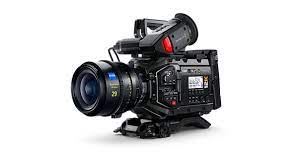
| Compatibility | URSA Broadcast G2, URSA Mini, Studio Camera 4K/6K, Micro Studio Camera |
| Weight | 7.94 lb (3.6 kg) |
| Form Factor | Desktop or Rack-mount (fits into a sliding rack shelf) |
Operational Insight
In a 2026 workflow, the ATEM Camera Control Panel is a vital piece of hardware for any multi-camera setup larger than a simple podcast. While you can control these settings via the free ATEM Software Control, having physical joysticks allows an engineer to "ride the iris" in real-time—essential for outdoor events where the sun may go behind a cloud during a live shot.
Integration Note: To use this panel with non-Blackmagic cameras, you would typically need a third-party bridge or a Blackmagic 3G-SDI Shield for Arduino to translate the ATEM protocol, as it is designed natively for the Blackmagic SDI/HDMI control protocol.