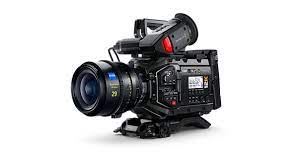
the Blackmagic Design Spares - Cable - USB-C 12K Assy is the internal high-speed data harness for the URSA Mini Pro 12K and 12K OLPF. This "Assembly" (Assy) is not a standard external cable; it is the internal bridge that connects the physical USB-C port on the camera's exterior to the high-bandwidth headers on the Main PCB.
Given the 12K’s ability to record massive data rates (up to $900\text{MB/s}$ or more to external NVMe SSDs), this cable is a critical component in the recording chain.
Functional Role
The USB-C 12K Assembly is responsible for several high-stakes tasks:
-
High-Speed Data Tunneling: It carries the Blackmagic RAW (BRAW) data stream from the image processor to the external recording port.
-
Peripheral Communication: It provides the data link for Zoom and Focus Demands when used in a studio or broadcast configuration.
-
Power Delivery (PD): It carries the $5\text{V}$ power required to "bus-power" external SSDs.
-
Firmware Updates: It is the primary connection for the Blackmagic Camera Setup utility to communicate with the camera's internal FPGA.
When to Replace the USB-C 12K Assembly
Because the USB-C port is often used for heavy external SSDs that "hang" off the side of the camera, the internal assembly is a common point of mechanical failure:
-
Intermittent SSD Connection: If your SSD disconnects or the "Media" light flashes red when the cable is wiggled, the internal solder joints or the port housing in the assembly have likely fatigued.
-
Physical Port Damage: If a cable was tripped over or yanked, the internal pins of the USB-C port can be crushed or bent.
-
"Disk Not Found": If the camera refuses to recognize any SSD, but the SSDs work on a computer and the camera's internal CFast slots work fine.
-
Update Failure: If the camera is not recognized by a computer for firmware updates via the USB-C port.
Key Features
-
12K Certified: Shielded to prevent EMI (Electromagnetic Interference) from leaking into the 12G-SDI or audio circuits during high-speed data transfers.
-
Reinforced Housing: Features the specific screw-mount holes used to secure the port to the URSA's magnesium chassis, preventing the port from being pushed into the camera body.
-
Direct Header Connection: Uses a specialized multi-pin micro-connector that "clicks" into the 12K Main PCB.
Technical Installation Note
Repair Level: 2 (Moderate). Replacing this assembly requires opening the camera side panel.
-
Side Panel Access: You will need to remove the screws securing the non-operator side (left side) of the camera.
-
Cable Routing: The 12K interior is incredibly dense. Pay close attention to how the old cable is routed. If you route the new cable over a heat sink or under a screw boss, you risk melting the insulation or "pinching" the data lines.
-
Port Alignment: Before tightening the chassis screws, ensure the USB-C port is perfectly centered in its cutout. If it is slightly askew, external cables will not seat deeply enough to establish a high-speed data connection.
-
Static Safety: Always use an ESD-safe workspace. A static discharge into the USB-C port during installation can travel straight to the Main PCB and destroy the USB controller.
Expert Advice: Before replacing the internal assembly, always test with a 10Gbps or 20Gbps rated USB-C cable (shorter than $0.5\text{m}$). Many recording failures are caused by using "charging" cables or long cables that cannot maintain the $800\text{MB/s}$ minimum throughput required for 12K BRAW.
Is your camera failing to see external drives entirely, or are you getting "dropped frames" during recording?