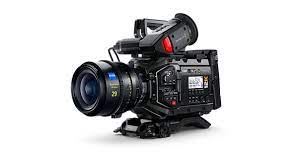
The Blackmagic Design Spares - Camera CC - LCD Assembly is the complete replacement screen module for the original Blackmagic Cinema Camera (EF/MFT) and the Production Camera 4K.
Because these legacy cameras rely on a resistive touchscreen (which requires physical pressure to register a touch), the LCD is more prone to physical wear and "delamination" than the modern capacitive screens found on the Pocket series.
Kit Components
A genuine LCD Assembly typically includes:
-
5-inch LCD Panel: The high-resolution display (roughly $800 \times 480$ native, scaled for $1080\text{p}$ monitoring).
-
Resistive Digitizer: The outer flexible layer that detects touch input via pressure.
-
Flex Ribbon Cable: The multi-pin data connector that hooks directly into the SATA/Display Bridge PCB.
-
Mounting Frame: The internal bracket that aligns the screen within the aluminum chassis.
When to Replace the LCD Assembly
-
Touch Non-Responsiveness: If you have to press extremely hard to change settings or if certain "dead zones" appear where the touch no longer registers.
-
The "Rainbow" Effect: A common failure in legacy CC units where the digitizer layer begins to separate from the LCD, creating a localized "oil slick" or Newton's rings appearance.
-
Backlight Burn-out: The camera records and outputs via SDI/Thunderbolt fine, but the internal screen is dim or completely black.
-
Digitizer Scratches: Unlike glass capacitive screens, these are made of a softer plastic. Deep scratches can cause "phantom touches," making the camera menu jump around erratically.
Technical Installation Note
Repair Level: 4 (Advanced). This is a high-stakes repair because the original Cinema Camera was not designed with modularity as a priority.
-
Chassis Teardown: You must remove the rear aluminum panel. To do this, you'll need to remove the rubber "bung" covers and the specific hex screws from the back of the camera.
-
Ribbon Cable Fragility: The LCD connects to a bridge board. The connector is a "flip-lock" ZIF (Zero Insertion Force) style. These plastic tabs become brittle over time; if you snap the tab, the new LCD will not stay connected.
-
The Internal Battery: In many versions of this camera, the internal "non-user-replaceable" battery sits very close to the LCD assembly. Be careful not to puncture the battery casing with your prying tools.
-
Resistive "Pinches": When reassembling the aluminum shell, ensure the edges of the LCD are not being pinched by the chassis. On a resistive screen, even a tiny amount of constant pressure from a misaligned frame will make the touch interface unusable.
Diagnostic Tip: Resistive vs. Capacitive
If you are used to modern smartphones, remember that this screen will not respond to a light "flick." It requires a deliberate press. Before replacing the hardware:
-
Try using a stylus or the tip of a fingernail. If the screen responds to a fingernail but not a thumb, the digitizer is still functional, just "old school."
-
Check for "Menu Lock." If you can see the image but can't trigger the menu, ensure the camera isn't in a display-only mode via the physical buttons on the back.
Expert Advice: If your screen is physically cracked, you must replace the entire assembly. Because the digitizer is bonded to the LCD, attempting to replace just the top plastic layer usually results in destroying the fragile LCD underneath.
Are you experiencing a total loss of image, or is the touch interface simply failing to respond?