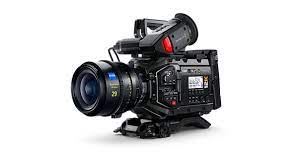
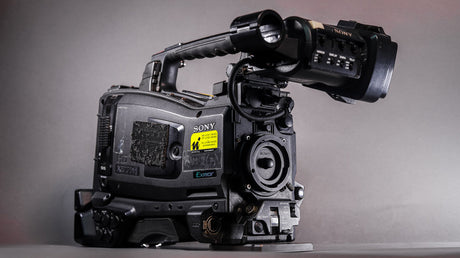
Blackmagic Design Spares - Camera URSA Mini - Main Chassis
Blackmagic Design Spares - Camera URSA Mini - Main Chassis is backordered and will ship as soon as it is back in stock.
Couldn't load pickup availability
Welcome to our store Learn more
Up to 50% off on certain Certified Pre-Owned Broadcast Equipment
New collections added! Learn more
Blackmagic Design Spares - Camera URSA Mini - Main Chassis is backordered and will ship as soon as it is back in stock.
Couldn't load pickup availability
The Blackmagic Design Spares - Camera URSA Mini - Main Chassis is the central "skeleton" of the camera system. Unlike the side panels or the top escutcheon, which are exterior skins, the Main Chassis is the internal structural frame that everything else—the sensor, the global shutter mechanism, the cooling system, and the primary circuit boards—bolts onto.
It is precision-engineered to provide the absolute rigidity required for a professional cinema camera.
The most critical role of the chassis is maintaining the Flange Focal Distance.
Zero Flex: The chassis ensures that the distance between the lens mount and the sensor remains constant to within microns ($0.001\text{mm}$), even when a $15\text{kg}$ cinema zoom lens is mounted to the front.
Thermal Sink: The magnesium alloy is designed to draw heat away from the sensor block and transfer it toward the "wind tunnel" where the fan can exhaust it.
Grounding Plane: The chassis acts as a unified electrical ground for the entire camera, reducing the risk of static interference or "hum" in the audio and video signals.
The chassis is the core of the "Mini" form factor and is shared across:
URSA Mini 4K / 4.6K
URSA Mini Pro 4.6K (G1 & G2)
URSA Mini Pro 12K
URSA Broadcast / Broadcast G2
Replacing the chassis is a "Level 3" (Total Strip-down) repair. It is usually only necessitated by catastrophic events:
Structural Cracking: Magnesium is incredibly strong but brittle. A high-velocity impact (like a camera falling off a tripod onto concrete) can crack the frame. Once the frame is cracked, the lens mount will no longer be "square" to the sensor, making it impossible to achieve sharp focus across the entire frame.
Stripped Internal Standoffs: If the internal threaded standoffs that hold the Main PCB or the Sensor Block are stripped or snapped, the internals will "rattle," leading to intermittent electrical failures or sensor misalignment.
Fire or Extreme Heat Damage: If a camera is caught in a fire or suffers a major electrical short that melts internal mounting points, the chassis must be replaced to ensure the safety and alignment of new components.
Corrosion: In extreme maritime environments, if salt water enters the camera, it can cause "pitting" in the magnesium. This can eventually compromise the structural integrity of the mounting points.
Replacing a chassis is effectively building a new camera using the "guts" of the old one.
The Sensor Block: The most delicate part of the transfer is moving the sensor assembly. This must be done in a clean-room environment (or at least a very high-quality dust-free workspace). Any dust that gets between the sensor and the chassis during the move will be visible in every frame you shoot.
Thermal Paste/Pads: You must replace all internal thermal interface materials. The old pads will be compressed and dry; using them in a new chassis will lead to immediate overheating issues.
Screw Mapping: You will be removing over 50 screws of varying lengths, diameters, and thread pitches. Mapping these is mandatory. Using a long screw in a chassis hole intended for a short one can punch through and destroy the Main PCB.
Shimming: After a chassis swap, you must re-check the flange distance. Even with a precision OEM chassis, the stack-up of tolerances means you will likely need to re-shim your lens mount to ensure your "infinity" focus is accurate.
Expert Advice: If your camera body is simply scratched or scuffed, do not replace the Main Chassis. Instead, look for the Right/Left Side Panels or the Top Escutcheon. You should only undertake a chassis replacement if the camera has suffered a structural failure that affects the image or the ability to mount lenses securely.
Did the camera suffer a major fall, or are you seeing "softness" on one side of your image that suggests the mount is no longer square?

The Blackmagic Design Spares - Camera URSA Mini - Main Chassis is the central "skeleton" of the camera system. Unlike the side panels or the top escutcheon, which are exterior skins, the Main Chassis is the internal structural frame that everything else—the sensor, the global shutter mechanism, the cooling system, and the primary circuit boards—bolts onto.
It is precision-engineered to provide the absolute rigidity required for a professional cinema camera.
The most critical role of the chassis is maintaining the Flange Focal Distance.
Zero Flex: The chassis ensures that the distance between the lens mount and the sensor remains constant to within microns ($0.001\text{mm}$), even when a $15\text{kg}$ cinema zoom lens is mounted to the front.
Thermal Sink: The magnesium alloy is designed to draw heat away from the sensor block and transfer it toward the "wind tunnel" where the fan can exhaust it.
Grounding Plane: The chassis acts as a unified electrical ground for the entire camera, reducing the risk of static interference or "hum" in the audio and video signals.
The chassis is the core of the "Mini" form factor and is shared across:
URSA Mini 4K / 4.6K
URSA Mini Pro 4.6K (G1 & G2)
URSA Mini Pro 12K
URSA Broadcast / Broadcast G2
Replacing the chassis is a "Level 3" (Total Strip-down) repair. It is usually only necessitated by catastrophic events:
Structural Cracking: Magnesium is incredibly strong but brittle. A high-velocity impact (like a camera falling off a tripod onto concrete) can crack the frame. Once the frame is cracked, the lens mount will no longer be "square" to the sensor, making it impossible to achieve sharp focus across the entire frame.
Stripped Internal Standoffs: If the internal threaded standoffs that hold the Main PCB or the Sensor Block are stripped or snapped, the internals will "rattle," leading to intermittent electrical failures or sensor misalignment.
Fire or Extreme Heat Damage: If a camera is caught in a fire or suffers a major electrical short that melts internal mounting points, the chassis must be replaced to ensure the safety and alignment of new components.
Corrosion: In extreme maritime environments, if salt water enters the camera, it can cause "pitting" in the magnesium. This can eventually compromise the structural integrity of the mounting points.
Replacing a chassis is effectively building a new camera using the "guts" of the old one.
The Sensor Block: The most delicate part of the transfer is moving the sensor assembly. This must be done in a clean-room environment (or at least a very high-quality dust-free workspace). Any dust that gets between the sensor and the chassis during the move will be visible in every frame you shoot.
Thermal Paste/Pads: You must replace all internal thermal interface materials. The old pads will be compressed and dry; using them in a new chassis will lead to immediate overheating issues.
Screw Mapping: You will be removing over 50 screws of varying lengths, diameters, and thread pitches. Mapping these is mandatory. Using a long screw in a chassis hole intended for a short one can punch through and destroy the Main PCB.
Shimming: After a chassis swap, you must re-check the flange distance. Even with a precision OEM chassis, the stack-up of tolerances means you will likely need to re-shim your lens mount to ensure your "infinity" focus is accurate.
Expert Advice: If your camera body is simply scratched or scuffed, do not replace the Main Chassis. Instead, look for the Right/Left Side Panels or the Top Escutcheon. You should only undertake a chassis replacement if the camera has suffered a structural failure that affects the image or the ability to mount lenses securely.
Did the camera suffer a major fall, or are you seeing "softness" on one side of your image that suggests the mount is no longer square?