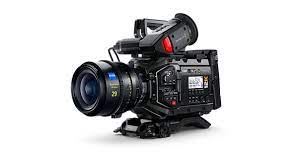
The Blackmagic Design Spares - Camera URSA Mini - Mic Assembly 4.6K is the internal stereo microphone module housed at the front of the camera body. While professional sets usually rely on external XLR mics, this assembly is the "voice" of the camera's internal scratch tracks, used for reference audio and automatic syncing in post-production.
Unlike the "Mic Mesh," which is just the external cover, this is the complete electronic component.
Components of the Assembly
The assembly is a pre-wired module that typically includes:
-
Dual Omnidirectional Capsules: Two matched microphone capsules positioned to capture a natural stereo field.
-
Shock Mount Housing: Small rubber or silicone grommets that "float" the capsules to prevent lens motor noise or handling vibrations from being picked up as low-frequency thumps.
-
Wiring Loom: A delicate, shielded cable ending in a multi-pin connector that plugs into the Control PCB or the Front SDI Board (depending on your specific URSA revision).
When to Replace the Mic Assembly
Internal microphone failure is often subtle but can be identified by the following symptoms:
-
One-Sided Audio: If the internal "Left" channel is silent while the "Right" works (or vice versa), one of the two capsules in the assembly has likely failed or its wire has snapped.
-
Excessive Mechanical Noise: If you hear every finger movement on the camera body as a loud "clunk," the rubber shock mounts in the assembly have likely perished or hardened, losing their dampening properties.
-
Constant Static/Hiss: If the internal mics produce a loud "white noise" floor regardless of the gain settings, the FET (Field Effect Transistor) inside the capsule may have shorted due to humidity.
-
Muffled High Frequencies: If the audio sounds like it’s behind a thick wall, the acoustic membrane on the capsules may be clogged with fine dust or moisture.
Key Features
-
Matched Sensitivity: The capsules are calibrated to have identical output levels, ensuring your stereo image doesn't "pull" to one side.
-
Compact Footprint: Designed specifically to fit into the small acoustic chamber at the top-front of the URSA Mini chassis.
-
Direct Plug-and-Play: Uses a standard connector, so no soldering is required once you have accessed the interior of the camera.
Technical Installation Note
Replacing the Mic Assembly is a Level 2 or 3 repair because it requires partially opening the camera's front housing.
-
Access Point: You generally need to remove the Top Escutcheon and sometimes the side panel to reach the connector.
-
Cable Routing: The wires for the internal mics are very thin (high-gauge). When reassembling the camera, ensure these wires are routed through their designated channels. If they get caught between the magnesium panels, they will be severed instantly when you tighten the screws.
-
Seating the Capsules: Ensure the capsules are seated firmly within their rubber boots. If they are loose, they will rattle against the "Mic Mesh," creating a "buzzing" sound in your audio whenever the camera moves.
-
Testing: Before closing the camera, power it on and check the audio meters on the LCD. Tap gently on the left and right sides of the mic mesh to verify that both channels are responding independently.
Expert Advice: If you are getting no internal audio at all on both channels, check your Camera Menu first. Ensure the "Mic Input" is set to "Internal" and that the gain is not at $0\%$. If the settings are correct and there's still no signal, the issue is more likely the Control PCB than the mics themselves.
Are you experiencing a total loss of internal audio, or is one channel sounding "crackly" or distorted?