Welcome to our store Learn more

New collections added! Learn more

AFFORDABLE BLACKMAGIC EQUIPMENT. Broadcast Engineer standing by for queries.

SKU: S-BLA-BMCASS/GLASSPRO

Blackmagic Design Spares - Camera URSA Mini Pro - IR Filter

R 2,941.70
Tax included Shipping calculated at checkout.


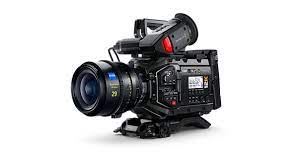
The Blackmagic Design Spares - Camera URSA Mini Pro - IR Filter is a precision-cut, coated optical glass element that sits directly in front of the sensor. While this part fits the 4.6K, 4.6K G2, and 12K models, the specific coating and thickness are critical to maintaining the color science and focus accuracy of the URSA Mini Pro line.

Unlike the Pocket Cinema Cameras, the URSA's IR filter is part of a more robust sensor block assembly, designed to be serviced in professional environments.


Core Responsibilities

  • Infrared Suppression: Its primary task is to block IR light wavelengths. Digital sensors are "too sensitive" to IR; without this filter, black fabrics look muddy brown/magenta, and skin tones lose their natural warmth.

  • Environmental Shield: This glass is the only thing standing between the outside world and the actual silicon sensor. It protects the sensor from dust, moisture, and physical contact during lens changes.

  • Refractive Index Matching: The thickness of this glass is calculated into the camera's flange focal distance. If it is removed or replaced with a non-OEM part, your lenses will no longer hit their infinity focus marks correctly.

When to Replace the IR Filter

  • "Magenta Shift": If your blacks look purple even with no ND filters used, the IR-cut coating may have oxidized or "failed" over time.

  • Cleaning Scratches: If a sensor swab with a piece of grit on it was dragged across the glass, it will leave a permanent scratch that appears as a soft, blurry line in your footage.

  • Delamination/Clouding: In high-humidity environments, you might see "rainbow" patterns or foggy patches inside the glass. This is the multi-layer coating separating from the glass base.

  • Physical Pitting: Small "chips" in the glass caused by debris hitting the sensor during high-speed filming (e.g., car-to-car shooting without a lens).


Technical Installation Note

DANGER: Level 4 (Expert) Repair. This is the most delicate physical operation you can perform on an URSA.

  1. Dust is the Enemy: You must work in a "clean box" or a room with an active HEPA filter. Any dust trapped behind this glass during installation will be permanently visible and cannot be cleaned without taking the camera apart again.

  2. Gasket Seating: The filter sits on a rubber gasket. If this gasket is twisted or not seated flush, the filter will sit at an angle. This causes "planarity issues," where the left side of your image might be in focus while the right side is soft.

  3. Torque Calibration: The retaining ring or screws must be tightened evenly (in a "star" pattern). Over-tightening can crack the filter or stress the sensor board.

  4. Flange Focal Check: After replacing the glass, it is professional practice to check the "back focus" of the camera. You may need to add or remove shims from your lens mount (EF, PL, or F) to compensate for the new glass.


Identifying the Failure

Symptom Probable Cause
Magenta blacks in sunlight Failed IR-cut coating (Replacement required)
Small black spots at $f/22$ Simple dust (Try a blower first)
Soft, blurry spots at all f-stops Physical scratch or oil (Attempt wet clean, then replace)
Rainbow "oil slick" patterns Coating delamination (Replacement required)

Expert Advice: Many users mistake internal ND filter dust for IR filter dust. Cycle through your ND filters ($2, 4, 6$ stops). If the dust spots move or disappear when you change NDs, the problem is your ND assembly. If the spots stay exactly the same on "Clear" and all ND settings, the dust is on this IR filter.

Are you noticing permanent marks on your footage, or are you trying to fix a color-cast issue?

Blackmagic Design Spares - ATEM 1M/E Advanced Panel - Button
Blackmagic

Blackmagic Design Spares - Camera URSA Mini Pro - IR Filter

R 2,941.70

The Blackmagic Design Spares - Camera URSA Mini Pro - IR Filter is a precision-cut, coated optical glass element that sits directly in front of the sensor. While this part fits the 4.6K, 4.6K G2, and 12K models, the specific coating and thickness are critical to maintaining the color science and focus accuracy of the URSA Mini Pro line.

Unlike the Pocket Cinema Cameras, the URSA's IR filter is part of a more robust sensor block assembly, designed to be serviced in professional environments.


Core Responsibilities

  • Infrared Suppression: Its primary task is to block IR light wavelengths. Digital sensors are "too sensitive" to IR; without this filter, black fabrics look muddy brown/magenta, and skin tones lose their natural warmth.

  • Environmental Shield: This glass is the only thing standing between the outside world and the actual silicon sensor. It protects the sensor from dust, moisture, and physical contact during lens changes.

  • Refractive Index Matching: The thickness of this glass is calculated into the camera's flange focal distance. If it is removed or replaced with a non-OEM part, your lenses will no longer hit their infinity focus marks correctly.

When to Replace the IR Filter

  • "Magenta Shift": If your blacks look purple even with no ND filters used, the IR-cut coating may have oxidized or "failed" over time.

  • Cleaning Scratches: If a sensor swab with a piece of grit on it was dragged across the glass, it will leave a permanent scratch that appears as a soft, blurry line in your footage.

  • Delamination/Clouding: In high-humidity environments, you might see "rainbow" patterns or foggy patches inside the glass. This is the multi-layer coating separating from the glass base.

  • Physical Pitting: Small "chips" in the glass caused by debris hitting the sensor during high-speed filming (e.g., car-to-car shooting without a lens).


Technical Installation Note

DANGER: Level 4 (Expert) Repair. This is the most delicate physical operation you can perform on an URSA.

  1. Dust is the Enemy: You must work in a "clean box" or a room with an active HEPA filter. Any dust trapped behind this glass during installation will be permanently visible and cannot be cleaned without taking the camera apart again.

  2. Gasket Seating: The filter sits on a rubber gasket. If this gasket is twisted or not seated flush, the filter will sit at an angle. This causes "planarity issues," where the left side of your image might be in focus while the right side is soft.

  3. Torque Calibration: The retaining ring or screws must be tightened evenly (in a "star" pattern). Over-tightening can crack the filter or stress the sensor board.

  4. Flange Focal Check: After replacing the glass, it is professional practice to check the "back focus" of the camera. You may need to add or remove shims from your lens mount (EF, PL, or F) to compensate for the new glass.


Identifying the Failure

Symptom Probable Cause
Magenta blacks in sunlight Failed IR-cut coating (Replacement required)
Small black spots at $f/22$ Simple dust (Try a blower first)
Soft, blurry spots at all f-stops Physical scratch or oil (Attempt wet clean, then replace)
Rainbow "oil slick" patterns Coating delamination (Replacement required)

Expert Advice: Many users mistake internal ND filter dust for IR filter dust. Cycle through your ND filters ($2, 4, 6$ stops). If the dust spots move or disappear when you change NDs, the problem is your ND assembly. If the spots stay exactly the same on "Clear" and all ND settings, the dust is on this IR filter.

Are you noticing permanent marks on your footage, or are you trying to fix a color-cast issue?

View product