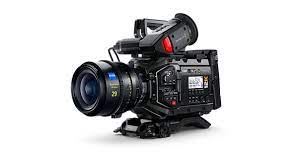
The Blackmagic Design Spares - Camera URSA Mini Pro - IR Filter 12K is the precision-coated optical glass that serves as the primary barrier for the URSA Mini Pro 12K’s high-resolution sensor.
In the 12K ecosystem, this part is often referred to interchangeably with the "OLPF" (Optical Low Pass Filter) in newer models, but its primary function is Infrared (IR) suppression. Because the 12K sensor is incredibly sensitive to light across the spectrum, this filter is essential for maintaining color accuracy.
Critical Functions
-
IR Cut-Off: Digital sensors are naturally sensitive to infrared light, which causes "IR pollution" (blacks turning muddy purple or magenta). This filter clips those wavelengths to ensure deep, clean blacks.
-
Color Science Preservation: It is tuned specifically for Blackmagic’s Generation 5 Color Science, ensuring that the unique RGBW-style pixel array of the 12K sensor produces accurate skin tones.
-
Sensor Shielding: It acts as a physical "dust cover." When you clean your "sensor," you are actually cleaning this glass. It prevents debris from reaching the actual silicon sensor wafer.
When to Replace the IR Filter
-
Magenta Tinting: If you notice that your images have a permanent red/purple cast that cannot be corrected in DaVinci Resolve, the IR-cut coating on the glass may have degraded.
-
"Swirls" or Delamination: In extreme heat or humidity, the multi-layer coatings can separate, creating a "rainbow" or "oil-slick" effect on the glass.
-
Physical Scratches: Scratches caused by improper cleaning or a lens hitting the glass. These show up as soft, blurry spots that stay in the same place regardless of the lens used.
-
Pitting: Small "craters" in the glass caused by salt spray or industrial dust, which scatter light and reduce contrast.
Key Specifications
-
Compatibility: Specifically for the URSA Mini Pro 12K. While it may physically fit other URSA Mini Pro housings, the optical thickness and coating are calibrated for the 12.2MP sensor’s specific light-gathering properties.
-
Coating: Multi-layer anti-reflective and IR-absorbing coating.
-
Material: High-purity optical grade glass.
Technical Installation Note
DANGER: Level 4 (Expert) Repair. Replacing this filter is an "open-heart" surgery for your camera.
-
Clean-Room Environment: You must perform this in a "clean box" or a room with a HEPA air purifier. Any dust trapped between the IR filter and the sensor during installation is permanent and will ruin every shot you take.
-
Vacuum Over Blowing: Do not use canned air. The propellant can freeze and crack the glass or leave a chemical residue. Use a high-quality manual bulb blower or a specialized sensor vacuum.
-
Gasket Alignment: The filter is held by a delicate rubber gasket. If the gasket is pinched, the glass will sit at an angle, causing one side of your image to be perpetually out of focus (flange focal distance error).
-
No-Touch Zone: Never touch the inside face of the replacement glass. Once installed, you can only clean the exterior.
Expert Advice: Before buying a replacement, try a "wet clean" using a $12\text{K}$-sized sensor swab and specialized sensor cleaning fluid. Often, what looks like a scratch is actually a streak of dried oil or mineral residue that a dry cloth won't remove.
Are you seeing a permanent magenta shift in your footage, or has the glass suffered physical damage from a lens or cleaning tool?