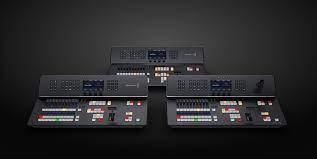


Hollyland Spares - DB25 Male to DB15 Female Tally Cable (for Wireless Tally System)
Hollyland Spares - DB25 Male to DB15 Female Tally Cable (for Wireless Tally System) is backordered and will ship as soon as it is back in stock.
Couldn't load pickup availability
Internal Wiring Map (Physical DB25 to DB15 Configuration)
If you are trying to custom-program a video mixer or troubleshoot an automated command sequence, the inner multi-core conductor paths inside the HL-TCB03 are laid out to safely isolate the individual camera logic circuits:
| Station Side (DB25 Male Pin) | Signal Function Allocation | Switcher Side (DB15 Female Pin) |
| Pin 1 through 8 | Dedicated Program (PGM) On-Air Red Triggers | Maps to Switcher Input Banks |
| Pin 11 through 18 | Dedicated Preview (PVW) Standby Green Triggers | Maps to Switcher Secondary Banks |
| Pin 22 through 25 | System Common Ground Loop Network | Combined Chassis Ground / Low Reference |
Hardware Validation: The Visual Cross-Check
To avoid on-set mismatch friction, inspect the interface shells closely before you bolt them into the video desk framework:
-
The Shell Footprint: The DB25 side is noticeably wider and handles the high density layout on the Hollyland controller box.
-
The Connector Density: The DB15 side is a standard-density shell using 2 rows of contact sockets (arranged as 8 sockets stacked over 7 sockets). If your vision console features a tight, 3-row micro-pin output port, this cable will not fit—that port requires a high-density HDB15 (HL-TCB07) variant instead.
Quick On-Set Functional Verification
If you have everything connected but your remote lamps aren't changing states correctly, perform this quick physical hardware test:
-
Unplug the DB15 female end from your video switcher console.
-
Take a small piece of bare copper wire or a paperclip and jump one of the active camera channel pins directly to a ground pin on the DB15 socket.
-
If the corresponding wireless on-camera tally light illuminates instantly on your set, the cable and Hollyland station are functioning perfectly—this confirms that the issue lies within your switcher's internal software configuration or GPIO menu mapping settings.